
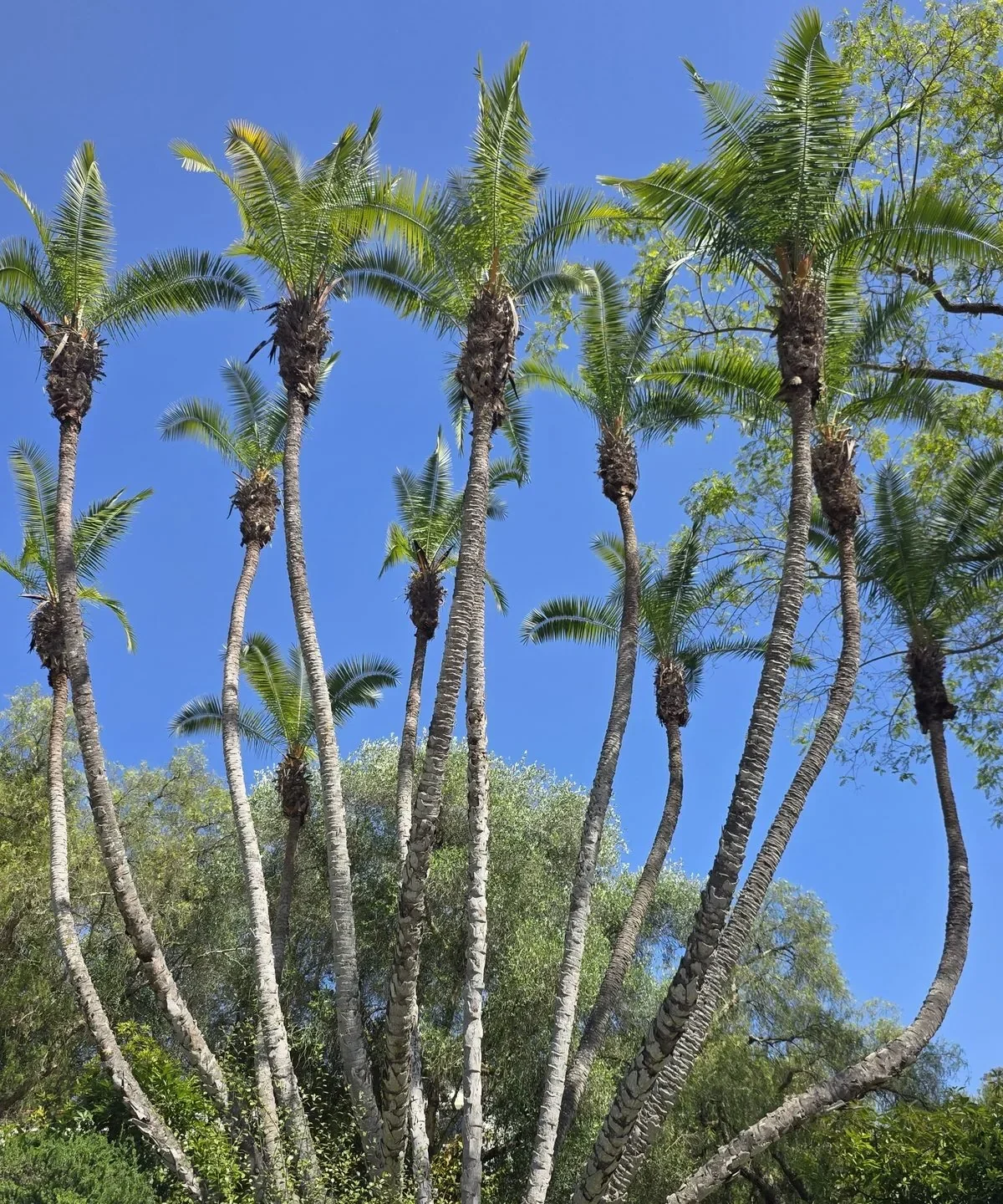
Palm trees are part of the scenery in Santa Barbara. They frame ocean views, tower over neighborhoods, and give local landscapes some of their unmistakable Southern California character.
But eventually, those palms start looking a little less picturesque. Brown fronds hang down. Seed pods get heavy. Fruit starts dropping across patios and walkways. And homeowners start asking the same question:
When should you trim palm trees?
Knowing when to trim palm trees is a little different from traditional tree pruning. Palms do not follow the same dormant-season schedule as many deciduous trees. In Santa Barbara, the right time to trim a palm depends largely on the species, the condition of the palm, and what actually needs to be removed.
Palm Trees Do Not Have a Traditional Pruning Season
If you are used to caring for oaks, fruit trees, or other woody trees, you may expect palms to have one ideal pruning season.
Palm trees just work differently.
In fact, palms are more closely related to grasses than traditional hardwood trees. New growth comes from a central growing point at the top of the palm, while older fronds gradually age, brown, and die.
Healthy palms generally benefit from trimming based on their condition rather than simply because a particular month has arrived.
Professional palm trimming typically focuses on dead or declining material, developing seed or fruit stalks, clearance concerns, and potential hazards around the property.
When to Trim Palm Trees in Santa Barbara
For most Santa Barbara properties, it is a good time to schedule palm trimming when you begin seeing dead or declining fronds, developing seed or fruit stalks, or clearance and safety concerns.
That means the timing varies from one palm to another.
Seed and fruit production is one reason Santa Barbara palms don’t fit neatly into a single trimming season. Queen palms in particular can produce flowers, fruit, and seed pods through much of the year in our mild climate. On some properties, it can seem almost constant. Date palms and fan palms follow their own growth and maintenance patterns as well, so watching the individual palm is more useful than waiting for a particular month.
Once seed or fruit stalks begin maturing, the fruit and seeds can become especially messy around driveways, patios, lawns, pool areas, and walkways.
Removing those stalks before the fruit and seeds begin dropping heavily can save you quite a bit of cleanup later.
At the same time, dead hanging fronds deserve attention whenever they appear, as does any palm creating a safety concern. The condition of the palm should guide the schedule more than the date on the calendar.
Queen Palms, Date Palms, and Fan Palms in Santa Barbara
Three of the palms we work with most often around Santa Barbara are queen palms, date palms, and fan palms. Each brings its own maintenance considerations.
- Queen palms are prolific seed producers, and their orange fruit and hard seeds can create an almost year-round cleanup issue on some properties. Regular attention to developing seed stalks can help keep patios, driveways, lawns, and pool areas cleaner.
- Date palms can develop large, heavy fronds along with fruit and seed stalks that deserve attention, particularly when they grow near homes, walkways, outdoor living areas, or other frequently used spaces.
- Fan palms are especially recognizable when older dead fronds accumulate around the trunk in a hanging “skirt.” In addition to looking untidy and eventually dropping, that dry material can become a fire concern in Southern California.
The species may change, but the approach stays consistent: evaluate what the palm is doing, remove what needs attention, and preserve healthy foliage whenever possible.

The Better Question Is: What Should Be Removed?
The amount of material removed can have just as much influence on palm health as the timing of the work. One of the most common palm trimming mistakes is over-pruning.
A healthy green frond is still doing work for the palm. It is producing energy through photosynthesis and supporting the overall health of the plant. Removing too many healthy fronds can stress the palm and leave it with that skinny, top-heavy appearance sometimes associated with aggressive palm trimming.
The University of California Agriculture and Natural Resources recommends retaining healthy green foliage and avoiding excessive pruning.
In simpler terms: your palm should still look like a palm when the trimming is finished.
Learn More From UC Agriculture and Natural Resources
What We Remove During Palm Trimming
- Dead or dying fronds
- Heavy or mature seed pods and fruit stalks
- Fronds creating clearance concerns
- Material posing a hazard over walkways or gathering spaces
- Damaged or problematic growth that warrants professional attention
Dead fronds can deserve additional attention in fire-prone areas. Fan palms in particular may retain old, dry fronds around the trunk, creating the familiar skirt seen on many mature palms. That accumulation of dry material can add fuel around a property, making regular removal an important consideration for both palm maintenance and fire safety.
The primary goal is to remove the material that has reached the end of its useful life or is creating a problem while preserving the healthy foliage that the palm still needs.
What About Yellow Palm Fronds?
This is where things can get interesting.
A yellow or discolored frond can tell you more than simply that it looks ready for the pruning saw.
Yellowing may indicate a nutrient deficiency, watering problem, pest pressure, disease, root stress, or another Plant Health Care concern. Cutting away the visible symptom may improve the palm’s appearance temporarily while leaving the underlying issue unresolved.
If several fronds are yellowing, the canopy looks thin, or the palm simply does not seem as vigorous as it once did, a broader health evaluation may be worthwhile.
Branch Out provides complete palm tree care, including health evaluations, fertilization, pest management, disease monitoring, and ongoing maintenance.
Learn More About Palm Tree Care
Palm Seed Pods Can Help Set Your Schedule
For many Santa Barbara homeowners, seed pods are the real calendar. Anyone who has had palm seeds rolling across a driveway or collecting around a pool knows exactly why.
At Branch Out Tree Care, we routinely remove seed and fruit stalks as part of palm trimming. This can be especially helpful with queen palms, which may produce seed pods throughout much of the year. Catching them before they fully mature can help reduce mess, slipping hazards, unwanted seedlings, and repeated cleanup around the property.
Fallen fruit and hard seeds can also become a concern on properties with curious pets. Dogs in particular have a habit of picking up things they find on the ground, and palm seeds are better kept off the menu.
If the same palms cause trouble around roughly the same time every year, that pattern can also help establish a regular maintenance schedule.
A little planning can mean taking care of the pods before the annual rain of palm seeds begins.
Clean Tools Are Part of Good Palm Care
There is another part of palm trimming homeowners rarely see: sanitation.
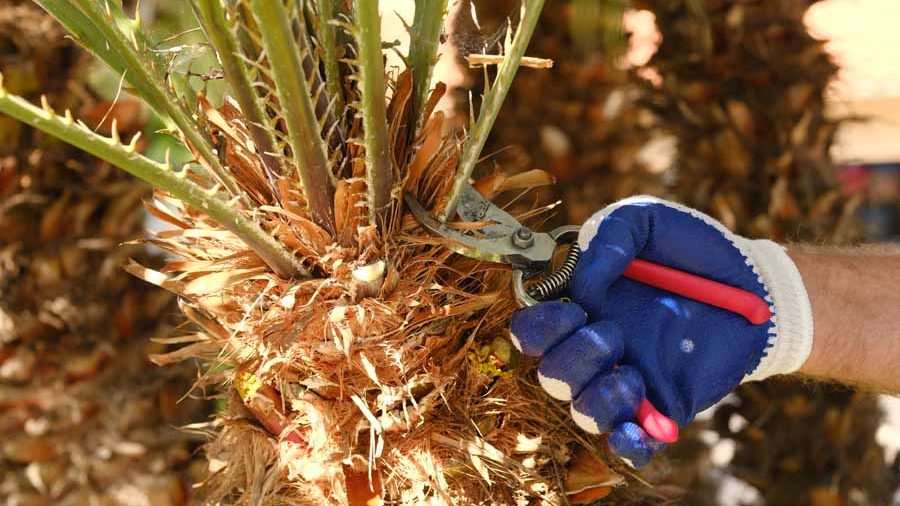
Several palm diseases can spread through contaminated pruning equipment, while pathogens may also enter through pruning wounds. Proper tool sanitation between palms can help reduce the risk of carrying pathogens from one tree to another.
Branch Out Tree Care sterilizes tools between palms as part of our standard trimming practices.
It is a small detail from a homeowner’s perspective, but details like this are part of what separates thoughtful palm care from simply removing fronds.
Visit UC IPM for More Information About Palm Diseases
How Often Should Palm Trees Be Trimmed?
Every palm follows its own schedule.
Some may need relatively little attention. Others benefit from regular visits because of seed production, dead frond retention, their location near structures or walkways, or the expectations for a highly maintained property.
Species, location, health, growth patterns, and your goals for the property all help determine how frequently trimming makes sense.
For that reason, we prefer a maintenance schedule based on the actual palms rather than an automatic once-a-year rule.
Once we know your property and how your palms grow, we can help determine a schedule that keeps them healthy, safe, and looking their best.
Love Your Palms, Too
At Branch Out, Love Your Trees includes the palms that help make Santa Barbara look like Santa Barbara.
Good palm trimming combines restraint with attention. It means understanding what the palm needs, removing dead or problematic growth, and recognizing when yellowing, decline, or other symptoms deserve a closer look.
If your palms have dead fronds, heavy seed pods, clearance problems, or simply look like they are due for some professional attention, Branch Out Tree Care would be thrilled to help.