
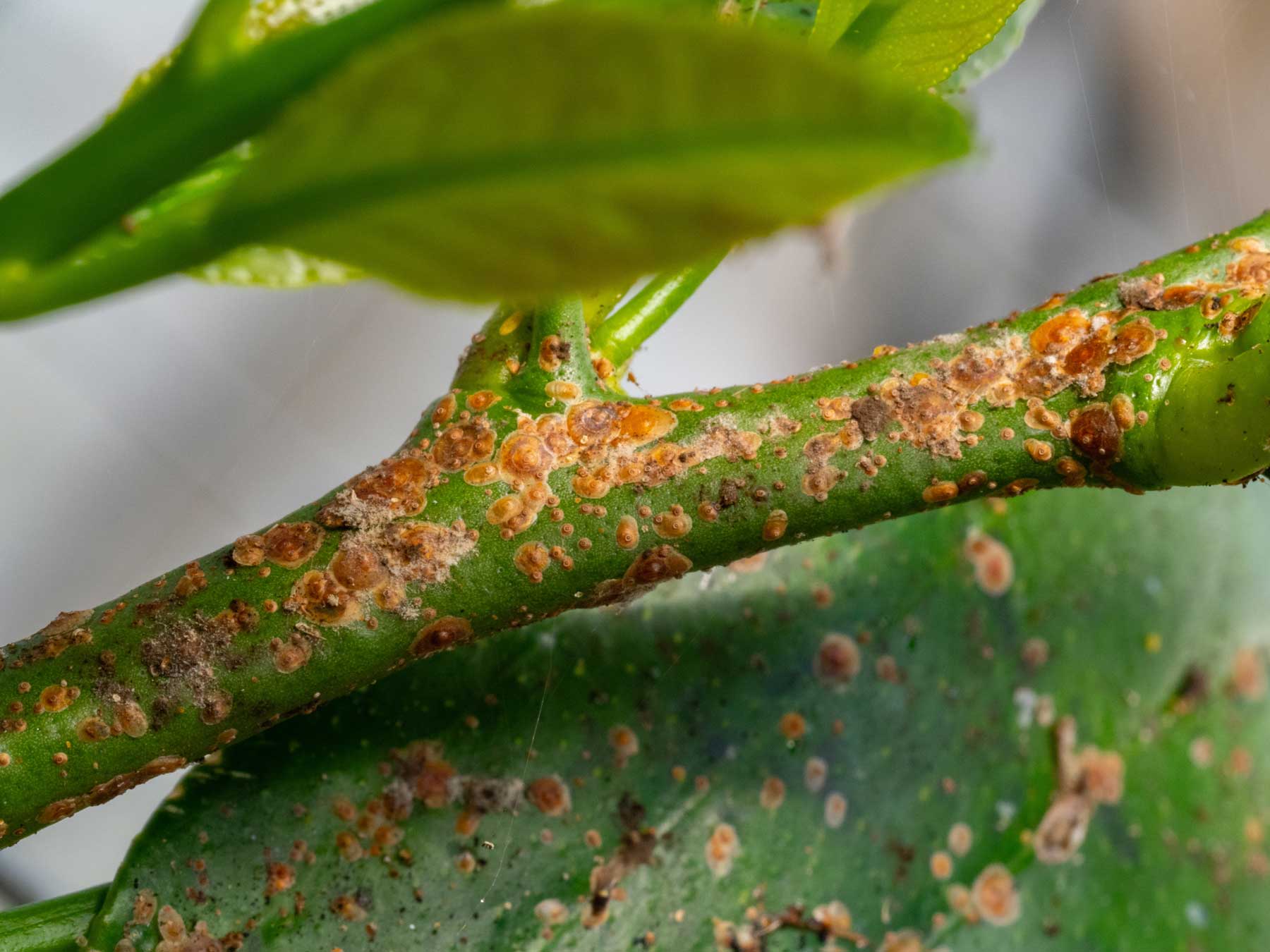
Scale insects can be easy to miss until the damage becomes obvious
These small pests often attach to stems, leaves, bark, or branches and feed on plant sap. Over time, scale activity can lead to yellowing leaves, weak growth, sticky honeydew, black sooty mold, premature leaf drop, and overall plant stress.
Branch Out Tree Care provides scale insect control in Santa Barbara, Montecito, Goleta, Carpinteria, Summerland, Hope Ranch, and the surrounding area as part of our Plant Health Care and pest management services.

Signs of Scale Insects
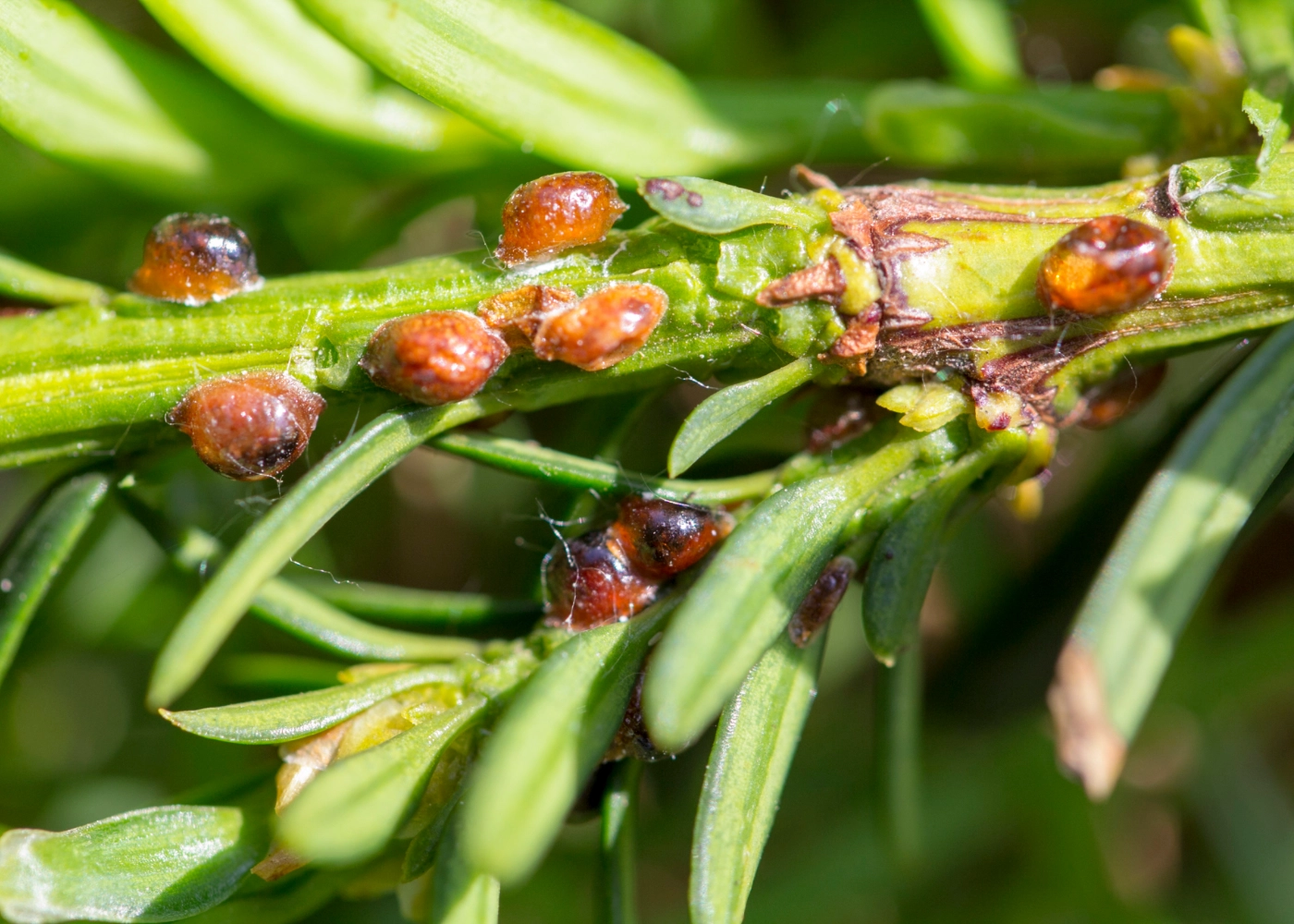
Scale insects may look like small bumps, shells, or waxy spots on leaves, stems, or bark. Some produce sticky honeydew, while others are harder to detect until the plant starts declining.
Common signs may include:
- Sticky residue on leaves, patios, cars, or walkways
- Black sooty mold
- Yellowing leaves
- Premature leaf drop
- Weak or thinning growth
- Small bumps on stems, leaves, or branches
- Ant activity around affected plants
- Declining citrus, ornamentals, shrubs, or landscape trees
Because different scale insects require different timing and treatment, proper identification matters.
Treatment Based on the Pest and Plant
Scale insect control works best when treatment is matched to the scale species, life stage, plant type, and severity of the infestation.
Depending on the situation, Branch Out may recommend:
- Monitoring
- Horticultural oil applications
- Insecticidal soap when appropriate
- Systemic treatment options
- Soil drenches
- Targeted foliar applications
- Pruning of heavily affected material
- Follow-up evaluations
Timing can be especially important. Scale insects are often more vulnerable during the crawler stage, so treatment planning is key.
Supporting Long-Term Tree Health
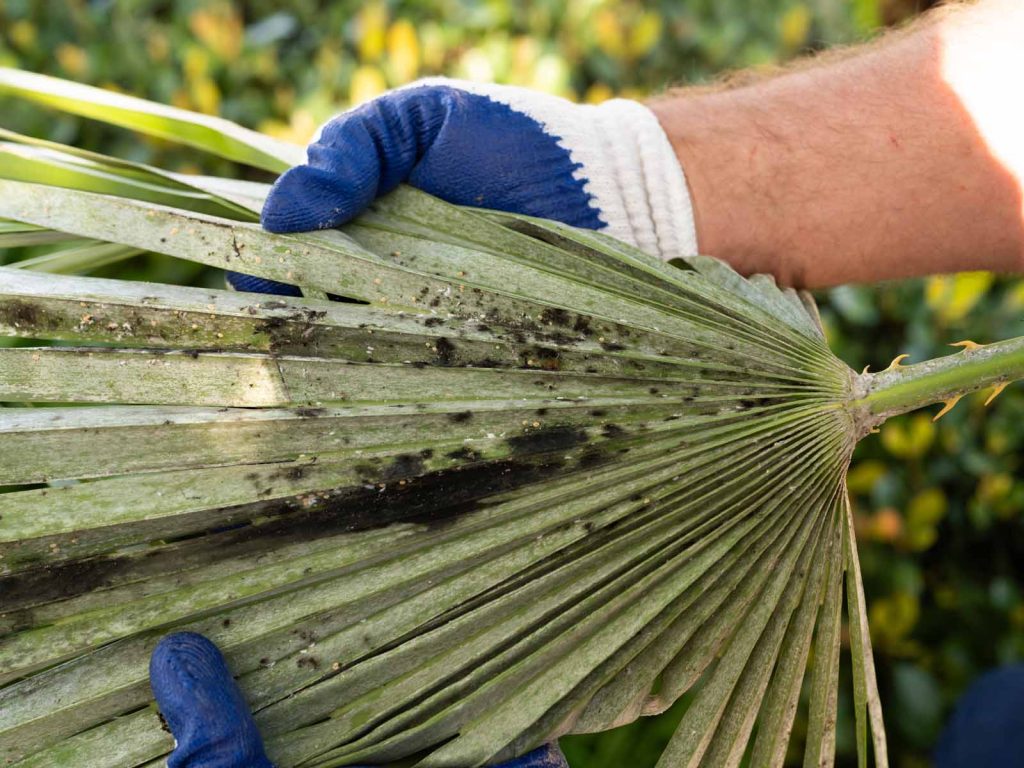
Scale problems are often connected to the larger health of the plant.
Stressed trees, dense growth, poor airflow, improper watering, ants, and nearby pest pressure can all make scale harder to manage. Branch Out looks at the whole picture before recommending treatment.
A scale insect control plan may also include Plant Health Care, pruning recommendations, soil support, disease monitoring, or ongoing pest management.