
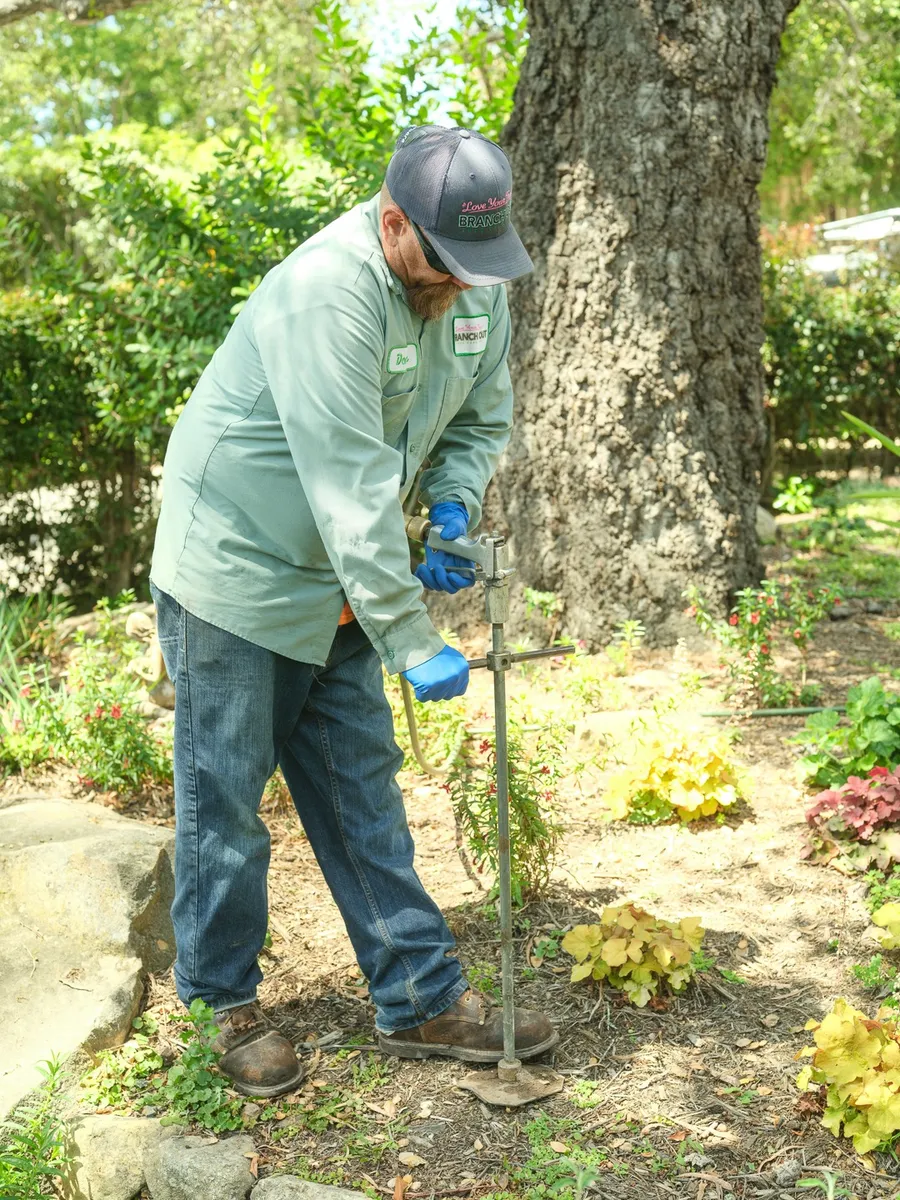
Healthy trees begin below the surface
When soil is compacted, depleted, dry, stressed, or unable to support strong nutrient uptake, trees may struggle even when the canopy still looks mostly intact. Deep root fertilization, also called deep root feeding, delivers liquid nutrients into the root zone where trees can better access them.
Branch Out Tree Care provides deep root fertilization in Santa Barbara, Montecito, Goleta, Carpinteria, Summerland, Hope Ranch, and the surrounding area as part of our Plant Health Care services.
Feeding the Root Zone
Roots drink water. They don’t eat fertilizer pellets.
That is why surface fertilizer is not always the best option for trees, especially mature trees or trees growing in compacted, stressed, or nutrient-poor soil. Deep root fertilization places nutrients below the surface, closer to the roots that need them.
This approach may help support:
- Healthier root development
- Improved nutrient availability
- Better canopy color and growth
- Trees showing signs of nutrient deficiency
- Trees growing in compacted or depleted soil
- Stressed trees that need long-term support
- Fruit trees, ornamentals, palms, and mature landscape trees
Branch Out are experts in making sure your valuable trees receive the best feeding and treatment possible.
When Deep Root Fertilization May Help
Deep root fertilization may be recommended when a tree is showing signs of stress, poor growth, or reduced vigor.
Common signs may include:
- Yellowing leaves
- Thin canopy growth
- Small or pale leaves
- Poor seasonal growth
- Reduced fruit production
- Stress after drought, pruning, or construction
- Trees growing in lawns or compacted soil
- Mature trees that need ongoing health support
Fertilization is not always the answer, so Branch Out evaluates the tree, soil, site conditions, and visible symptoms before recommending treatment.
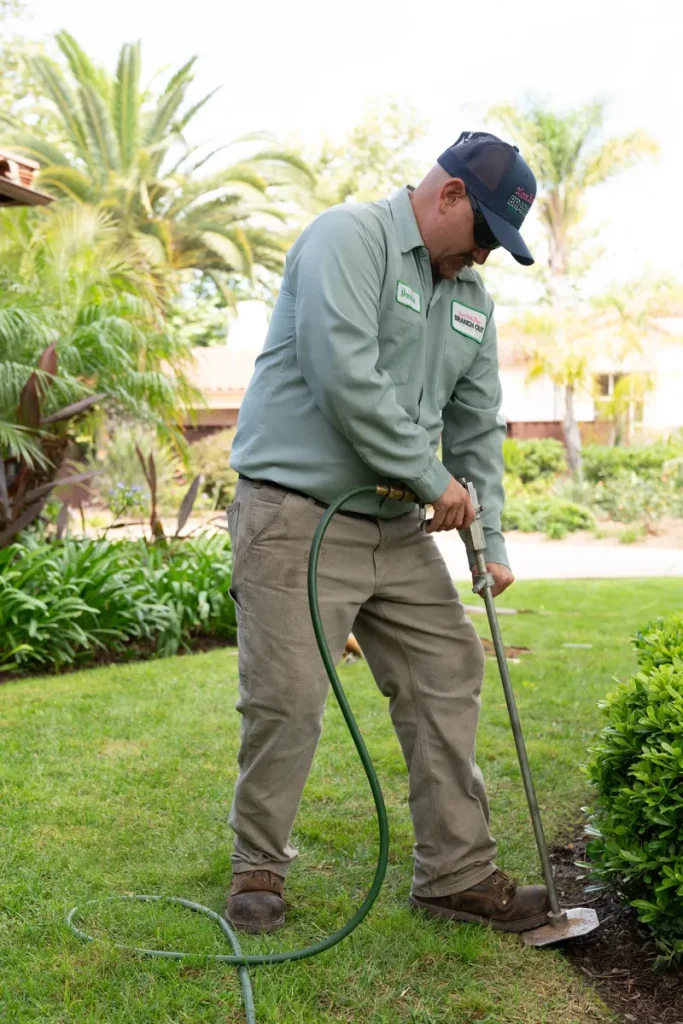
Part of a Complete Plant Health Care Plan
Deep root fertilization often works best as part of a broader Plant Health Care plan.
Depending on what your tree needs, Branch Out may also recommend soil testing, foliar feeding, pest management, disease treatment, pruning, mulch guidance, or follow-up monitoring.
When we understand the full picture, we can make better recommendations and avoid treating the wrong problem.